Drones vs Tanks: Drone Technology's Impact on Modern Warfare
Drones, or unmanned aerial vehicles (UAVs), have revolutionized reconnaissance and strike capabilities.
NEWS-GLOBAL
Jaalle J. Rage Ali
12/24/20253 min read
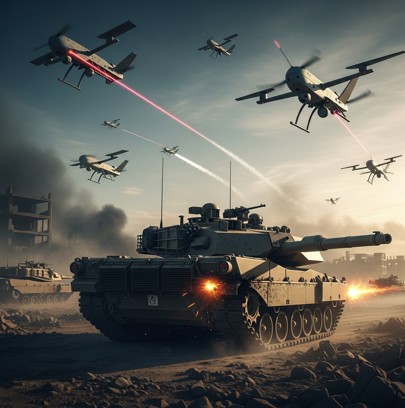
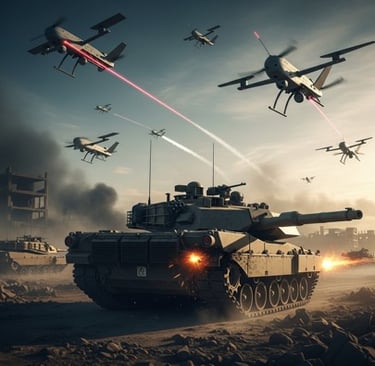
Drones have changed the way the military plans and fights, making tanks and other armored vehicles less useful in the fast-paced world of modern warfare. This change is because tanks can't fly like drones do. The war between Russia and Ukraine is still going on, and it shows how hard it is for armored forces to fight when aerial surveillance and precision missile strikes are common. Drones, also known as unmanned aerial vehicles (UAVs), are now a big part of how the military works. Military operations can be more accurate and efficient than ever before because they can provide real-time intelligence, surveillance, and reconnaissance. Military operations are much more accurate and efficient because they can give real-time intelligence, surveillance, and reconnaissance (ISR) capabilities. A lot of drones have been used by both sides in Ukraine, which shows how they can change how well regular ground troops work. Drones are great because they can fly for a long time and change to fit different situations. Drones can fly long distances, gather information, and carry out precise tasks with little risk to soldiers. This is not like regular military vehicles, which need a lot of logistical help and usually only work in small areas. This broadening of operational scope has profoundly transformed the approach of military strategists regarding engagements.
Airborne surveillance may provoke reactions from ground forces, often resulting in counterproductive outcomes, especially for units that heavily rely on armored vehicles such as tanks. The war between Russia and Ukraine has shown that drones can sometimes be better than traditional armored warfare methods. For example, Ukrainian troops used drones like the Bayraktar TB2 very well. This showed not only how good they were at attacking but also how important they were for psychological warfare. People are rethinking armored units, which have always been the best at winning wars because of their weapons and speed, because they can now hit targets from a strategic aerial position. Drones can find these units and tell them to launch more airstrikes, which is changing the battlefield in a big way. Also, the costs of operating drones can make it much less cost-effective to keep heavy tanks in good shape. Drones are usually cheaper to make and use than tanks, which need a lot of resources and can cost millions of dollars. This difference has made a lot of military strategists rethink how useful tanks will be in future wars on the front lines. Now they want to know if money should be spent on drone technology instead of regular armored vehicles. Also, the fact that drones are being used more and more to attack tanks in battle shows weaknesses that weren't noticed before. Newer tanks have better armor and weapons that can take direct hits from regular artillery. But people are very worried that drone strikes are getting more accurate and that they often use weapons that are specifically designed to fight armored vehicles. Drone swarms have beaten tank formations, which shows that these small, flexible platforms can beat even the best armored forces. Another thing to think about is how drones change the way people think. People on the ground are less likely to do things when they think that operations could be watched from above and surprise attacks could happen. Soldiers who are used to feeling almost completely safe in their armored vehicles may feel more exposed than they ever have before.
The conflict between Russia and Ukraine has taught us that we need to find new ways to fight wars. The use of drones in joint operations will likely change the way wars are fought in the future. In joint operations, unmanned systems, ground forces, and air support all work together all the time. Military experts are already suggesting that units and strategies be reorganized to deal with this change. They are moving away from relying on large tank battalions and toward a mix of forces that can respond quickly using UAVs. Countries are changing their military strategies because of the changing conditions on the battlefield in Ukraine. The growing focus on developing advanced drone technologies shows that global defense strategies are changing in a big way. UAVs will be more powerful in future wars because of better artificial intelligence, swarm technology, and the ability to carry more payloads. This will make traditional battle tanks less useful. In conclusion, tanks have always been thought of as an important part of land warfare.
However, what we learned from the Russo-Ukrainian battle shows that modern combat techniques have changed a lot. Drones not only work better than armored vehicles, but their growing abilities will also change how the military works in the future. If this trend keeps up, regular tanks may need to change quickly, or they could become useless in a world where drones are becoming more and more common in the air.
________________________________________________________________________________________________________________